


[Segunda y última entrega]
A modo de introducción
El presente trabajo se puede remitir a la famosa frase popular «No hay plazo que no se cumpla, ni deuda que no se pague» pues, hacia enero de 1983 adquirimos en Buenos Aires el libro «Focust East - Early Photography in the Neareast [1839-1885]» del notable fotohistoriador israelí Nissan N. Perez [1947] y en el cual encontramos con sorpresa el nombre del fotógrafo Schier, apellido alemán coincidente con un profesional actuante en Buenos Aires hacia la década de 1870 y del cual contábamos inclusive con una pequeña colección de seis carte-de-visite. A 32 años de distancia hemos pagado la deuda y entregamos a la consideración de ustedes, esta segunda entrega de una apasionante historia de la temprana fotografía internacional que une tres continentes a través de sus imágenes.
La investigación sobre la historia de la fotografía argentina en su primera época nos remite invariable a la actuación casi monopólica de un reducido grupo de profesionales provenientes de Europa y los Estados Unidos. Aquel impactante invento del daguerrotipo de repercusión mundial arribó finalmente a Buenos Aires a mediados del año 1843 de la mano del daguerrotipista norteamericano John Elliot quien publicó sus misteriosos servicios a través de la prensa porteña.
En ese tiempo el perfil de aquellos precursores tiene varios puntos en común; eran en su mayoría jóvenes aventureros dispuestos a recorrer el mundo explotando comercialmente el invento del francés Louis-Jacques-Mandé Daguerre [1787-1851] a través de inéditos ateliers de retratos.
Cruzaron el vasto Atlántico en frágiles navíos para llegar al Río de la Plata sin conocer el idioma castellano y, a continuación, debieron operar laboral y socialmente en una compleja sociedad sudamericana diferente a la de sus orígenes. Franceses, estadounidenses, ingleses, alemanes, italianos o austriacos formaron el grupo más numeroso y, se promocionaban entre sus compatriotas locales, apelando a sus patrias lejanas con símbolos, escudos o el nombre de las ciudades capitales.
Como descendiente del daguerrotipista alemán Adolfo Alexander [1822, Hamburgo - 1881, Buenos Aires], los tempranos artistas de habla alemana actuantes en nuestro país llamaron vivamente mi atención. Amén de las múltiples investigaciones sobre el mismo Alexander, hemos publicado un ensayo específico titulado «Daguerrotipistas y ambrotipistas alemanes en la Argentina» en la revista Todo es Historia y sendas biografías sobre los profesionales de la cámara Georg Sulszman, Godofredo Kaltschmidt, Herbert Kirchhoff y Carlos y Fernando Weiss.
Ahora encaramos la segunda y última parte del trabajo sobre el fotógrafo austríaco Antoine Schier; recordemos que el primer capítulo fue publicado en el N° 42 de esta newsletter, en octubre del 2024 y donde desarrollamos su actividad en la ciudad de Buenos Aires, primero asociado a su compatriota Leithner en la «Photographie de Vienne» y luego como único titular de aquel estudio fotográfico durante la década de 1870.
La fotografía austríaca
Todo indica que los inicios fotográficos de A. Schier se desarrollaron en Austria, cuya capital Viena era por entonces sede del poderoso Imperio Austrohúngaro [1867-1918], regido por el Emperador Franz Joseph 1° [1830 - 1916], cuyo reinado sobre 53 millones de súbditos se extendió por casi 68 años, uno de los más prolongados de las monarquías europeas.
Es interesante señalar a su vez los tempranos antecedentes sobre la fotografía en Austria. Los 1.200 kilómetros entre París y Viena permitieron que la novedad iconográfica generada por Monsieur Daguerre, fuera adoptada muy pronto por una monarquía ansiosa de perpetuarse a través aquellos mágicos retratos espejados.
La alta tecnología austríaca se sumó de inmediato a la fabricación de insumos claves. Por ejemplo, la antigua firma Voitgländer - creada en 1756 por Johann Cristoph - aportó la primera lente fotográfica basada en cálculos analíticos; estos objetivos fueron diseñados por el matemático húngaro-alemán Jósef Maximilian Petzval [1807-1891], reduciendo los tiempos de exposición de 20-30 minutos a solo 1-2 minutos y abriendo así las puertas al formidable negocio de la retratística de estudio. En 1849 Voitgtländer presentó al mercado mundial la primera cámara de daguerrotipo totalmente metálica y hacia 1868 la empresa había fabricado más de 10.000 lentes para diferentes equipos fotográficos.
La Sociedad Fotográfica de Viena - «en alemán Photographische Gesellschaft» - se fundó en Viena el 22 de marzo de 1861 a semejanza de prestigiosas entidades similares como las de Londres o París. Nucleó en su seno a entusiastas aficionados que realizaron a través de muestras y publicaciones - como la revista «Photographische Correspondenz» (1864) - una excelente divulgación del nuevo arte en el mundo de la cultura. La biblioteca fotográfica de la entidad llegó a contar con una considerable cantidad de manuales técnicos y artísticos a disposición de sus socios. Entre mayo y junio de 1864 se realizó una primera exposición donde se presentaron más de 1.100 obras apreciadas por 10.000 visitantes.
La poderosa monarquía y nobleza austrohúngara no fue ajena al fenómeno fotográfico y, sus principales miembros, se convirtieron en los privilegiados clientes de aquellos ateliers de daguerrotipía y fotografía. Paralelamente en ciertas casas reales se conformaron valiosas colecciones fotográficas, por ejemplo, la hoy preservada en la Biblioteca Nacional de Viena, la cual atesora dos millones de obras de los siglos XIX y XX.
Fue en el contexto científico, técnico y artístico de aquella Viena Imperial hacia la década de 1860, que el joven A. Schier se inició en el apasionante mundo de la fotografía profesional y, por supuesto, su especialidad fue la difícil retratística de estudio. Debemos señalar que hacia la fecha el retrato posado fue la gran salida comercial para la inmensa mayoría de los flamantes profesionales.
Como todos sus colegas A. Schier se volcó a la explotación comercial de los novedosos retratos en el formato de tarjetas de visita - o «carte-de-visite» en francés - pequeños rectángulos de 6 x 9 cm, gracias a negativos de vidrio al colodión húmedo y copias por contacto en papel a la albúmina o albuminado. El proceso y la cámara de cuatro objetivos se debieron al ingenio del francés André Adolphe Eugéne Disdéri [Niza, 1819- 1889] y permitía a los clientes obtener 12 retratos en diferentes poses.
Pero como a tantos y tantos precursores los límites del imperio austrohúngaro resultaron pequeños para colmar sus ansias de aventura y fortuna. El misterioso universo del Medio Oriente con sus exóticas costumbres y milenarias civilizaciones resultaron un imán irresistible para estos cazadores de imágenes.
Una cámara en tierra de faraones
Desde la gran campaña militar de Napoleón Bonaparte [entre los años 1798 a 1801] al reino de Egipto y el descubrimiento de la piedra Rosetta - que permitió luego de 1400 años descifrar sus jeroglíficos -, Europa había volcado su atención hacia la milenaria cultura de los faraones; este fenómeno no fue ajeno a la temprana fotografía que se embarcó en una fiebre de documentación visual.
Operadores pioneros como el daguerrotipista francés Joseph-Philibert Girault de Prangey o fotógrafos de la talla de Francis Frith, Felice Beato, James Robertson, Hammerschmidt, J. Pascal Sébah y Abdullah Freres, entre otros, enfocaron sus cámaras de viaje para capturar vistas inéditas de aquellas monumentales ruinas, testigos inmutables de una civilización superior.
Desde París hasta el puerto de Alejandría hay alrededor de 3.100 kilómetros, distancia que debió cubrir por tierra y mar nuestro viajero en busca de mejores oportunidades de trabajo. En esta ciudad - la segunda en importancia de Egipto - fundada por el conquistador Alejandro Magno en el año 331 a.C., Schier se radicó alrededor de una década ejerciendo el novedoso arte de la fotografía. De nuestro conocimiento Egipto fue el primer destino internacional de este inquieto peregrino visual; experiencia que marcó para siempre su «modus operandi» profesional.
Por entonces Egipto se encontraba bajo la influencia política y económica de franceses e ingleses, dos potencias interesadas en este amplio y estratégico dominio con más de 1.000.000 de km2 y 6 millones de habitantes. En este contexto sociopolítico la fotografía jugó un papel importante, precisamente por la veracidad de sus imágenes a través de vistas urbanas, rurales, arqueológicas e inclusive de tipos y costumbres populares. A cuarenta años del invento tales registros generaban gran interés en el continente europeo y otras regiones del mundo. Inclusive el periodismo a través de diarios y revistas se hacía eco de este fenómeno reproduciendo estas imágenes en litografías y otras técnicas mecánicas.
La sociedad Schier & Schoefft
A diferencia de los fotógrafos viajeros que documentaron fugazmente aquel Egipto de mediados del siglo XIX, el austríaco A. Schier tomó la decisión de radicarse en aquella exótica nación de mezquitas, desiertos y beduinos. Por la importancia comercial y política eligió sede de su empresa a la ciudad y puerto de Alejandría - a solo 220 kilómetros de El Cairo - abriendo un atelier artístico dedicado casi exclusivamente a la retratística fotográfica de estudio.
Por entonces la apertura de un local de fotografía funcionaba como una avanzada de la ciencia y la técnica y, aquellos fotógrafos extranjeros, fungían como artífices de un fenómeno más cercano a la magia que a la realidad. En sus misteriosos locales se desarrollaba una especie de acto teatral, donde hombres y mujeres acudían con sus mejores trajes y joyas para perpetuarse en haluros de plata. En aquellas galerías de pose vidriadas - casi siempre instaladas en azoteas - posaban frente a pesados cortinados de terciopelo, telones pictóricos de fondo, alfombras floreadas y un conjunto de muebles escenográficos como balaustradas, pedestales o floreros y hasta pequeños gabinetes que servían como apropiado marco ornamental para montar la escena deseada.
Por entonces estos retratos de estudio se obtenían sólo con iluminación solar de tipo cenital y en horarios que oscilaban en torno al mediodía; siempre bajo la indicación del artista las personas debían posar en la mayor inmovilidad posible y, en tal sentido, se utilizaban artefactos metálicos como sujetadores de nuca y otras estrategias.
Consideramos que A. Schier se instaló en la ciudad de Alejandría en la década de 1860. Abrió su establecimiento en sociedad con el húngaro Otto Schoefft [1833-1900], ambos conformaron una prestigiosa firma fotográfica que se desempeñó por varios años volcada hacia la moda predominante, el formato conocido como tarjeta de visita. Aunque no desestimaron la posibilidad de registrar los grandes monumentos del pasado y, en tal sentido, el mejor ejemplo es la famosa «Columna de Pompeyo», obra construida durante el Imperio Romano con granito rojo de Asuán, cuyo registro documenta aquella práctica.
Sobre el socio Otto Schoefft (1833-1900) diremos que nació en Pest - parte oriental de la ciudad de Budapest - y que provenía de una familia de artistas pintores. Siendo un joven aprendiz radicado en Venecia, tuvo como maestro al célebre Carlo Naya [1816-1882], pionero de la fotografía italiana premiado en exposiciones de París, Londres y Viena. Otto Schoefft es además autor del álbum fotográfico «Le Caire Pittoresque» que se conserva en la Biblioteca Nacional de Austria.
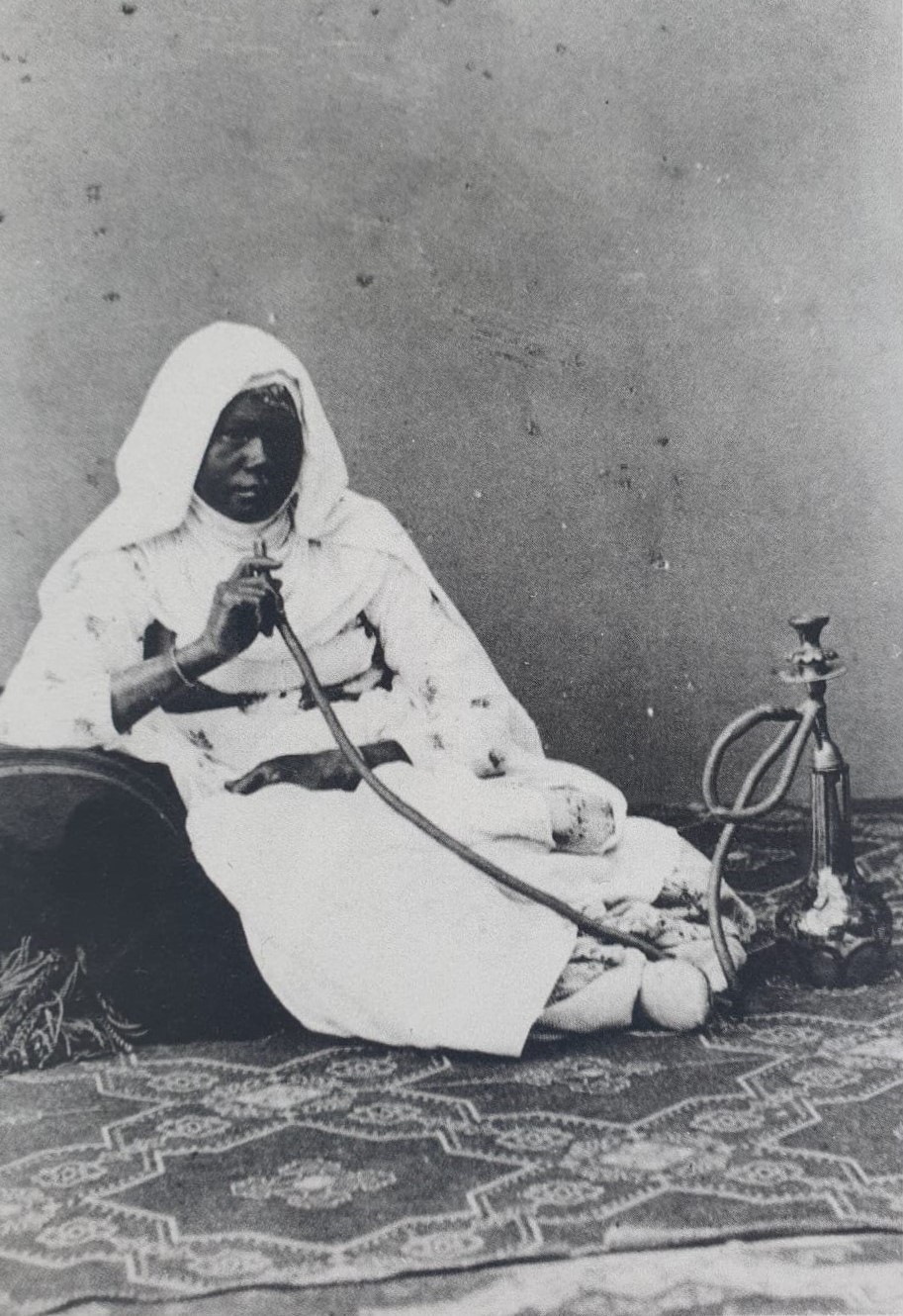
Mujer con narguile. Imagen reproducida en la obra Focus East. Early photography in the Near East - 1839 - 1885. Por Nissan N. Perez [Abradale/Abrams; 1988]
Dedicados por años en especial, al rentable negocio del retrato posado de estudio, Schier & Schoefft incluían entre sus clientes, tanto a los miembros de la alta sociedad egipcia de Alejandría, como a los residentes extranjeros, viajeros, arqueólogos o diplomáticos. Inclusive retrataron a viajeros occidentales vestidos con ropas árabes. [1] También editaron una interesante colección dedicada a los llamados «tipos populares», obras destinadas a turistas deseosos de llevarse un recuerdo sobre aquella exótica civilización. Son registros de estudio entre los cuales señalamos ejemplos sobre diversos personajes a cuerpo entero como sugerentes bailarinas, mujer con nargile, beduinos, el vendedor de plantas y flores, y un portador de agua o guerrero con cimitarra. Estas obras en carte-de-visite se entregaban iluminadas [coloreadas] a mano y con gran maestría.
En Alejandría la firma Schier & Schoefft regenteaba dos estudios ubicados en diferentes puntos clave de la antigua ciudad; uno sobre la Rue de la Mosquée y otro en la Rue de l' Églisé; estos atelieres artísticos solían ser promocionados a través de la prensa local y, a veces, al dorso de las pequeñas obras fotográficas.
Por entonces la influencia francesa era muy marcada en la sociedad egipcia y, por supuesto, aquel idioma prevalecía en los altos círculos vinculados al mundo del comercio, la cultura y la política. No es de extrañar entonces que la firma austrohúngara se promocionara a través del mismo, damos un ejemplo que se encuentra impreso litográficamente al dorso de un retrato fotográfico y que lo encabeza un escudo de armas con banderas y los símbolos turcos de la media luna y estrella:
«Schier & Schoefft
Alexandrie
Photographes de
S. A. le Prince Héréditaires
le Muchir Méhémet
Tewfik Pacha
Schier & Schoefft
Alexandrie.»
Un ingenioso recurso de aquellas firmas fotográficas consistió en pedir y obtener el patrocinio o respaldo de las casas reales, tal como lo constatamos en esta publicidad sobre el príncipe Tewfik Pacha [1852-1892] vinculado a la monarquía egipcia. Esta práctica comercial se proyectó desde la década de 1860 hasta finales del siglo XIX y se expandió desde Europa al resto del mundo. El mensaje hacia los clientes era bien claro: si la monarquía nos ha distinguido, la calidad artística de su retrato está garantizada.
El Emperador Francisco José I° visitó el flamante Canal de Suez - inaugurado el 17 de noviembre de 1869 - a bordo de la corbeta a hélice «Viribus Unitis» [en latín, Con las Fuerzas Unidas], lema personal del monarca austrohúngaro quien gobernó aquel vasto imperio desde 1848 hasta 1916. Consideramos que en esa ocasión sus leales súbditos Schier & Schoefft debieron tomar fotografías del monarca, obteniendo entonces este privilegio real. Años después y ya radicado en Buenos Aires, A. Schier utilizaba dicha Cruz al Mérito en su publicidad ubicada al dorso de los retratos.
Oportunamente los socios se expandieron abriendo una sucursal del estudio en la capital, El Cairo, con lo cual su prestigio aumentó en todo Egipto. En 1872 se disolvió la sociedad y el local pasó a manos del italiano Cesare Bernieri [Turín, 1848 - 1887], patriota garibaldino, pintor y fotógrafo, retratista de Victor Manuel II°.
A modo de conclusión
Finalizada esta etapa fotográfica los socios tomaron diferentes rumbos; por ejemplo, Otto Schoefft continuó trabajando en su profesión a través de un nuevo estudio en El Cairo. De su autoría y hacia 1876 editó una valiosa colección de vistas - entre ellas, la gran pirámide de Giza con la Esfinge - y tipos populares egipcios; obras impresas en papel a la albúmina en el tamaño mayor de 24,9 x 19,9 cm, y clasificadas sobre el negativo hasta el número 64. Algunas de estas imágenes decimonónicas se conservan en el Museo J. Paul Getty de California [USA].
Con relación a las obras en carte-de-visite producidas por Schier & Schoefft, diremos que las mismas se encuentran en los archivos de miles de familias alrededor del mundo pero, también, en instituciones prestigiosos como la National Portrait Gallery de Londres con retratos de personalidades notables como Sir Robert Gilmour Colcuhoun [1803 - 1870] - cónsul general inglés en Egipto -, Sir William Howard Rusell [1821 - 1907] - considerado el primer cronista bélico por sus reportajes en la Guerra de Crimea -, el capellán y escritor Edwin John Davis, Henry Hunter Calvert - vicecónsul británico en Alejandría -, o Eduard Lear [1812 - 1888] poeta e ilustrador. A su vez la obra de estos austrohúngaros se ha valorizado en los últimos tiempos, tendencia que se puede comprobar a través de las casas de subastas de Europa y los Estados Unidos.
Con relación a la trayectoria posterior de A. Schier, diremos que su afán aventurero lo llevó a partir de 1872 a radicarse en la lejana Buenos Aires - 11.800 kilómetros de distancia - donde operó solo o en sociedad - Schier & Leithner - durante casi una década, tal como lo publicamos en la primera parte de este trabajo de investigación.
Aquí la publicidad en francés de sus estudios fotográficos tanto al dorso de las obras como en la prensa local, siempre nos llamó poderosamente la atención, pues Schier era de nacionalidad austríaca y su idioma materno el alemán. La explicación hay que buscarla en su estadía de casi una década en aquel Egipto fuertemente influenciada por la cultura francesa, al menos en sus clases altas. Esta modalidad se mantuvo en el tiempo pues, al radicarse en Buenos Aires seguía haciéndolo en tal idioma, también muy atractivo para la clase adinerada local.
Ya radicado en Buenos Aires, A. Schier - ahora en sociedad con Leithner -, años después de su aventura en Medio Oriente, publicaba en el diario «The Standard» del 14 de agosto de 1873, un destacado aviso en inglés invitando al público porteño a una exposición en el Almacén de Fusoni sobre una serie de vistas fotográficas sobre Egipto y Arabia, toda una exótica novedad orientalista hacia la época.
Luego de su estadía en Argentina Schier preparó valijas y los necesarios equipos fotográficos para instalarse en el reino de Rumania, más precisamente en la pequeña población de Foksany o Focsany en la región de Moldavia, a sólo 185 kilómetros de la capital Bucarest. Aquí laboró a partir de la década de 1880 donde continuaba publicitando al dorso de sus retratos como: «A. Schier - Decoré par S. M. l' Empereur d' Autriche» o sea del monarca Francisco José I°.
Así fue la vida de aquellos intrépidos «Fotonautas» del siglo XIX, trabajando hasta en los lugares más recónditos del mundo. Llevaban en sus maletas aquella nueva y sorprendente fotografía - de photós, y graphé que en griego significa escribiendo con luz - como auténticos profetas del progreso humano.
Agradecimientos:
Hugo Basso; Osvaldo Betti; Ingrid Briege; Juan Gómez; Felicitas Luna; Marcelo Mazza; Noelia Perales; Luiza María Pereira; Héctor Pezzimenti; Fernando San Martín y Alfredo Srur (CIFHA).
Nota:
1. Esta sociedad fue incluida fue incluida entre los estudios fotográficos más importantes de su época en la reciente publicación de Sherif Boraie, A Face in Time. Egypt photo studios. 1865 - 1939, publicada en 2022.
* Especial para Hilario. Artes, Letras & Oficios